When people think about Nondestructive Testing, they usually think about equipment. Ultrasonic instruments, yokes, UV lights, thickness gauges, borescopes, and advanced imaging systems all come to mind. Those tools are important, and many of them represent significant advances in inspection technology.
But one of the most important inspection tools you'll ever use doesn't come from a catalog or an equipment supplier.
It comes with you to work every day.
Your eyes.
Most inspectors spend countless hours learning inspection techniques, understanding procedures, mastering equipment, and studying applicable codes and standards. We talk about classroom training, examinations, certification requirements, experience hours, calibration procedures, and acceptance criteria. Yet one of the most important parts of the inspection process is often overlooked: the ability to accurately observe what is in front of you.
It sounds obvious, but every inspection starts with an observation. Before an indication can be evaluated, it must first be seen. Before a discontinuity can be reported, it must first be recognized. Before a decision can be made, information has to reach the inspector in the first place. If critical information is missed during that very first step, everything that follows becomes far less reliable.
There is a reason many qualification and certification programs include periodic vision examinations. The purpose is not to create another administrative requirement. The purpose is to verify that inspectors possess the visual capability necessary to perform the work they are being asked to do.
Many inspection activities rely directly or indirectly on visual interpretation. Visual Testing (VT), Liquid Penetrant Testing (PT), Magnetic Particle Testing (MT), weld inspection, dimensional inspection, quality verification, and documentation review all depend on an inspector's ability to gather accurate information through observation.
Even inspection methods that rely heavily on instrumentation still require a human being to interpret results. The instrument may collect the information, but the inspector is responsible for understanding what that information means.
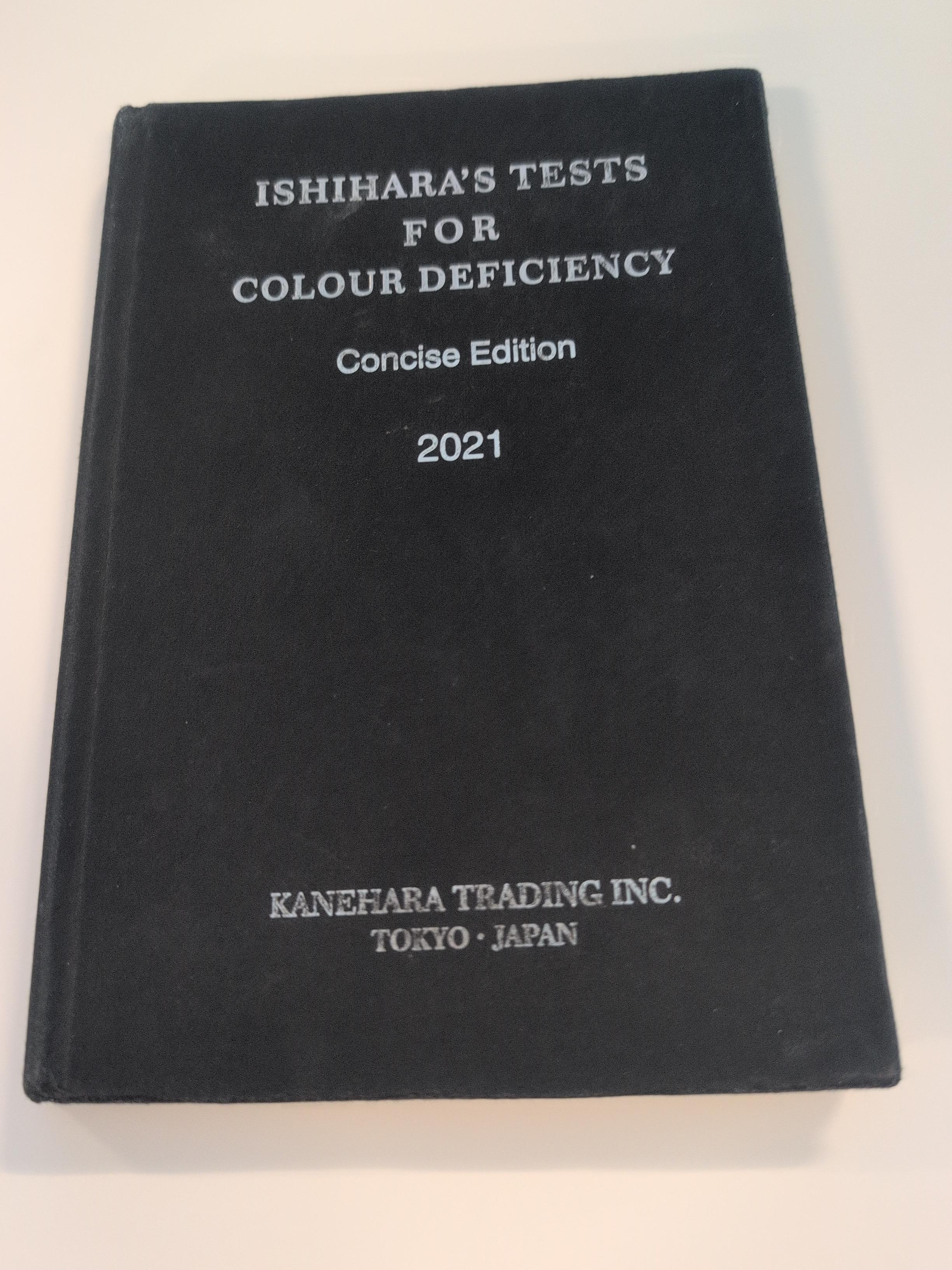
One of the most recognizable vision tests in industry is the Ishihara color vision test. Most inspectors have encountered it at some point in their careers.
At first glance, it appears almost too simple to be important. A series of colored circles. Hidden numbers. A quick screening. Nothing particularly impressive.
Yet its purpose is extremely important.
The test helps determine whether an individual can distinguish specific color differences that may be important to inspection activities. Depending on the application, color perception can play a role in evaluating liquid penetrant indications, interpreting magnetic particle indications, reading displays, identifying markings, or recognizing conditions that require additional evaluation.
The significance of color perception may vary depending on the task being performed, but the underlying lesson remains the same:
If information cannot be accurately perceived, it becomes much more difficult to make a correct inspection decision.
Every year inspection equipment becomes more advanced. We have better ultrasonic instruments, better software, better imaging systems, better reporting tools, and better methods of collecting and storing data than ever before.
Those advancements make inspectors more effective.
They do not eliminate the need for observation.
The most advanced instrument in the world cannot compensate for information that was never observed. The best procedure ever written cannot help if critical information is overlooked. The most expensive equipment on the market cannot replace attention to detail.
Technology is a powerful tool, but it is not a substitute for observation.
This article isn't really about an Ishihara book.
It isn't even about color vision.
It's about a much larger principle.
Inspectors often focus on the obvious tools: equipment, procedures, certifications, software, and technology. Sometimes we forget about the fundamentals that make all of those things useful.
Observation.
Attention to detail.
Situational awareness.
Professional judgment.
The ability to collect accurate information before reaching a conclusion.
Every inspection begins with observation. Everything else comes afterward.
Whether you're performing VT, MT, PT, UT, reviewing documentation, evaluating a weld, performing a quality audit, or analyzing the results of an examination, every inspection starts the same way.
Observation comes first.
Before an indication can be accepted or rejected, it must be recognized. Before a report can be written, information must be observed. Before a decision can be made, facts must be gathered.
The best inspectors never stop paying attention to the fundamentals.
Because before you can inspect it, evaluate it, accept it, reject it, or report it...
You have to see it.
Can't inspect what you can't see.
This is much closer to the style of your pressure gauge article: fewer headers, real paragraphs, less white space, and it reads like an experienced Level III having a conversation rather than a PowerPoint presentation.